

Written by: Dave Cantrell
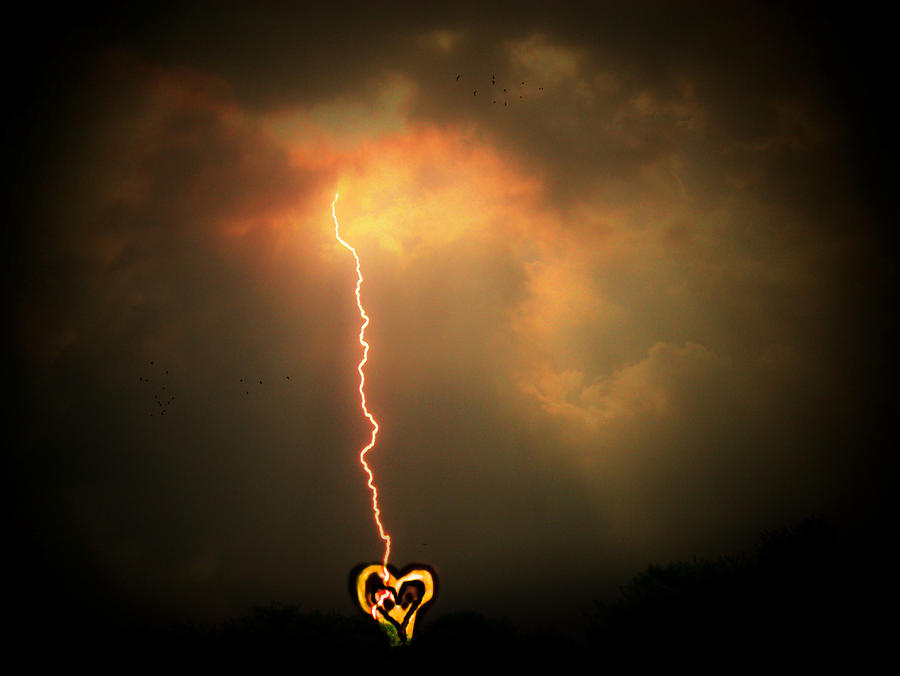
[At the risk of tempting the Fates (living as your author and his wife now do in the midst of the dense forests of Northern California where the temperatures of late when I began writing this were climbing into the high nineties while the rain gauges have been as dry as a teetotaling county in Tennessee) we’re nonetheless reviving our long dormant Lightning Strikes column as we see no other way to do anything close to justice to a slew of attention-demanding albums that landed in our lap over the past few months like some sort of storm rained upon us by, yeah, you guessed it, the Fates, what else. Thus we begin…]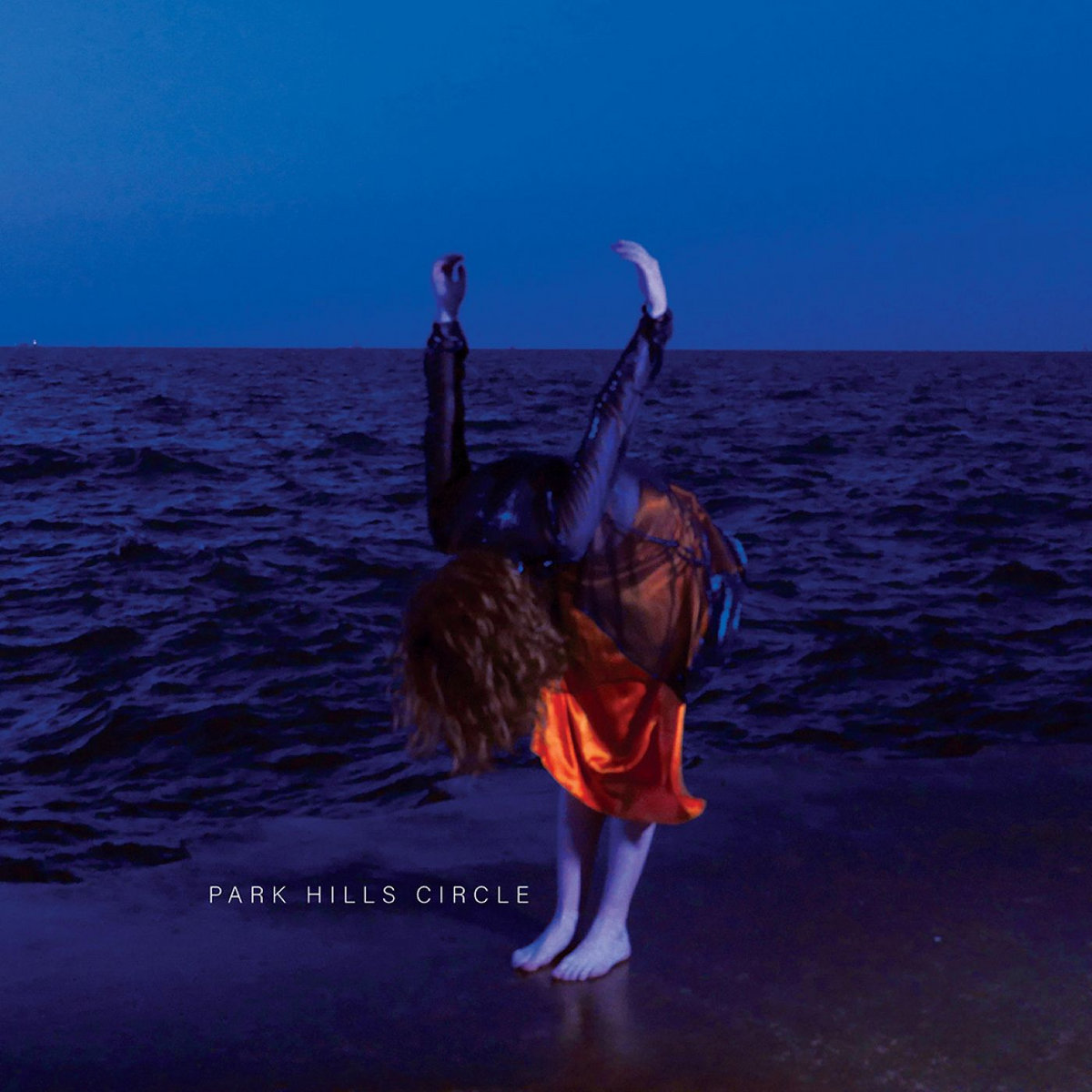
PARK HILLS CIRCLE – “All of a Sudden” (Pravda Records)
…in Chicago, where that eternally churning and most vital of American city’s equally essential label Pravda has again graced us with another home-based artist’s debut full-length, in this case in the form of “All of a Sudden” by Park Hills Circle, the nom-de-auteur of one Maris Maeve O’Tierney. Released July 10th, it must be noted that the album doesn’t in the strictest terms constitute a debut as Ms. O’Tierney’s resumé dates back ten-plus years via the rather extraordinary duo Maeve & Quinn (the latter being – somehow ‘or course’ – her twin violinist sister) that performed across the interdisciplinary spectrum with the Poetry Foundation, the Alvin Ailey American Dance Theater and others which isn’t to mention the duo’s work being performed not only by the Chicago Composers Orchestra but as well the Anchorage Symphony Orchestra and before you think ‘Wow, that came out of left field’ well, not so much, seeing as the twins’ upbringing includes time in Alaska. Throw that stew of ingredients together with a sublime musicality in no small part derived from Maris’s deep background in opera and classical guitar and you have an album that’s as deft as it is devoted to taking that varied melange of influence and experience and fashioning a result that somehow manages to mix the sui generis with the traditionalist like it’s just a thing you do when in fact no one’s quite done it like this before.
“Clearing,” kicking off, immediately establishes the web of dynamics at play across this record. Engagingly straightforward while blessed wit what may call an ‘intense melange’ of elements – synth tones hanging in the air like mist, a persistent pulse of percussion that manages to be dynamic yet understated and then of course there’s Maris’s vocal, sylph and sylvan in texture while being commandingly upfront – the track’s as strongly representative of the album entire as to pretty much rival any opening track in recent memory (and, wait, we haven’t even mentioned the sax showing up in the track’s last movement, in itself amply animated by the pull of yearning). All of which? Well, it’s a first impression the strength of which not only turned this listener’s head more commandingly than expected but sets a template of expectation for what follows that, to be honest, decades of music-listening experience suggests may not be met but in this case? We’re in luck, listener friends, we’re in luck.
Be it “Spring is Here,” built as an atmospheric delicacy that’s in fact akin to the strongest spider’s web in the world though this one, no surprise, glistens in the sun like carefully polished silver; “Unspoke” that, bedded as it is in alluring vibes and featuring some of the album’s most effecting lyrics – “Uspoke / that moment when everyone uncloaks // heat wave / we watch until the sun fades // I took all the hands off the kitchen clock / could we bear to tell time with our memory?” is how it 0pens – presents as one of the album’s most enduring cuts; the more driven “Company We Keep” that suggests what, say, Judy Collins might get up to were she writing in thuis darker more complicated time, the song underlying in its more urgent rhythms the steel-like resiliency that, irony of ironies, heartbreak helps build; the slyly twisting unexpectedness that undergirds “Playing With Fire” that’s born in the somber before spiring up into the air and the relative feedom that that accords and, hey, any song with a concise yet expansive line like “I had to love you twice to leave you” is going to get our attention which isn’t even to mention this head-turning stanza: “At a dead end of trees / you parked the car // you said “what do you see?” / I said “us growing apart”; down to the paean to romantic survival that is the album-closing title track, regret reaching into its overshadows and finding release, finding a peacefulness in self, finding out that “all of a sudden” can take however long and still feel like a fresh release, a ticket back to life and breathing and self-belief, a lot for a song to carry but in this case the burden, such as it is, awakens one morning transformed into the well-worn but wise ‘what’s possible.’
Now, to be clear, All of a Sudden” isn’t a ‘rock’ record nor strictly a ‘pop’ record nor exactly even a singer-songwriter record but rather all three of those wrapped into a single package exhibiting a skill that – importantly – trusts its potential listeners innate belief in songcraft, in the value of adroit and intrinsically resonant production touches that in itself, as much as anything, syncs with the artist’s belief in doing the work required, all of which, yeah, adds up to a very strong debut indeed. [quick credits, the supporting cast here deserve that: Matt Ulery bass (with the exception of Michael McDonald on “Company We Keep); Quin Kirchner percussion; Aaron and Maris synths/piano; Dustin Laurenzi: sax. Plus? Get your copy here]
LITVAR – “Being Here” (self-released)
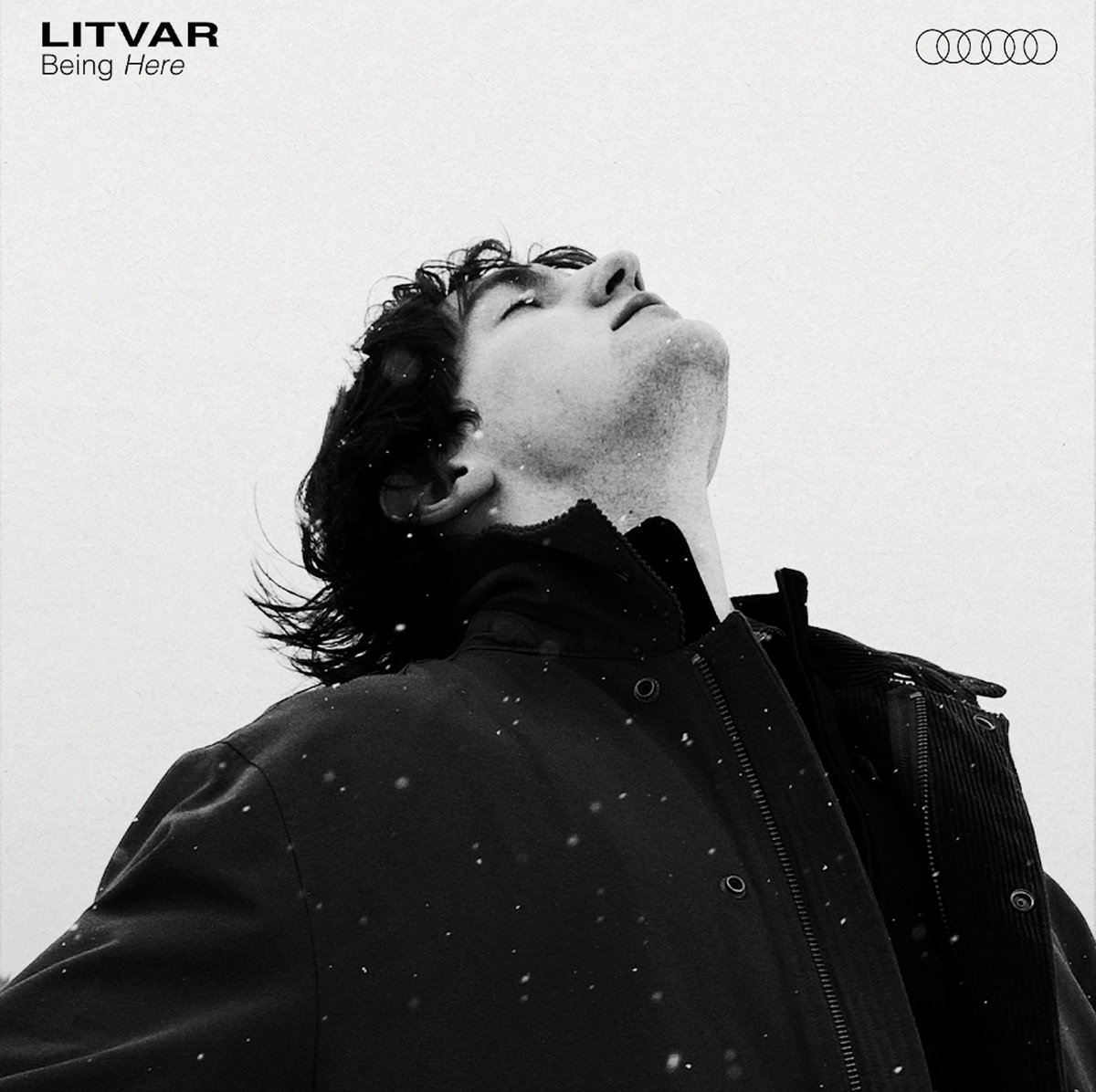
OK, so here’s what I need: some kind of, say, implant, a bio-adjacent chip of some sort that doesn’t just store the – rather literally – countless albums by countless artists that fall from the modern music ionoshpere at such a rate as to suggest the likes of a weekly solar storm made out of sound descending upon the scrawny shoulders of the many cadres of music writers hunched over their notebooks/laptops/whatever all across the globe, extracting adjectives and shaping metaphors with all the gumption they can summon, but does so with a sufficient supply of comparisons and nutgrafs to go with them. But alas, poor us, such help is surely never forthcoming and so we face the ever-uphill struggle with as much fortitude as a surfeit of crazy strong coffee and our long-built abundance of hopeless curiosity and the passion that its built upon can provide. Fortunately for us there’s never not another album from an artist or band that, as here, we’ve been previously unaware of that, however subtly or not-so, knocks our proverbial socks at least partially off and with that we welcome you to the world of Litvar, whose (ahem) third album Being Here was recently (self-) released.
Consisting of Rex Thurstan at the helm aided by Joe Lemieux, Violet Falkowsi and John Blues McCarthy and emerging out of Connecticut in 2020 with a debut (The Greatest Movie of All Time) that, listening to it in retrospect, arrived with such an inordinate level of panache as to suggest it was their fifth or sixth full-length, an impression only furthered by the archly entitled follow-up Eloquently Aimless and so here we find ourselves once again in that both humbling and thankful position of playing catch-up to a band that fate (again) failed to alert us to from the get-go so, um, let’s get going on this glorious third, shall we?
Recorded at home with the able aid of guitarist Falkowski and bassist and dedicated to the memory Thurstan’s dad Dale, Being Here is an album that traffics in moods as much as hooks and modalities, exploring the spectrum of human experience with a beguiling mix of panache and vulnerability that neither necessarily throws nor pulls any punches but rather sets it all before the listener like a Roschach test of emotions splashed across a Rubik’s Cube, which is to say the record carries itself with an unabashed passion dexterously arranged into eleven highly listenable tes wherein the emotion and pure craft sit – and stir – together in, well, harmony.
There’s the wry melancholia of opening track “It Takes Magic” thjat’s an out-of-but-still-in love song that limns the edges of regret in a kind of fraying elegance, every line like a sequence of sequins falling off the hem of an ex-girlfriend’s ball gown; the sad twinkling vibe of next-up “Belong” with its eternal line “broken records stay that way” and it’s those ever-prevalent bon mots that really (in a wonderfully sublime way) trip up what may be one’s expectations regarding a recording of this type, not least as they’re couched in such gently adhesive arrangements throughout.
Take “What Kind of Man,” for instance, its quietly addictive melody assuring lines like “I was doing better when I was suicidal” have their maximum impact; same with “Stay the Same,” as in “everything feels far away / when I’m trying to change // I can take the blame / and you can stay the same,” its structure and tempo ensuring you’re hearing every line while the arrangement it’s built on, in its usual sneaky, almost off-handed way, makes sure you stay the course; on the downtempo “Backstab” where the fragile presence of strings ensures the song will hang in the air like smoke, like the fog of memory; down to final track “Leaving Seattle,” a chill, matter-of-fact please-don’t-go song that, thematic bon mot not (necessarily) intended, ends proceedings on a moving note, a track that’s as unswervingly honest as it is hope-against-hope, not a blend most songwriters can summon yet here on “Being Here” Mr. Thurstan manages it with an élan one seldom encounters these days.
Overall, in a way, if you think Jonathan Richman minus the wry naiveté but instead bestowed with the emotional honesty of a young Tim Buckley, well, you’re in the vicinity so what the hell, you may as well pull over and have a listen, yeah? Yes indeed you should. [get Being Here here at the Motherwest merch page]
HACKEDEPICCIOTTO “Lichtung” (Mute Records)
There’s some sort of maxim out there that posits that for those experiencing a spell of darkness there’s always at least a spot of light on the horizon, a new dawn etc but what of those amongst us that actually carry with them a decided preference for the more crepuscular, those for whom the gloomier end of the spectrum tends to offer an almost fevered array of possibilities from the aesthetic to the full-out existential, where the joys and sorrows and whatever slings of fate and fortune tend to offer a more lasting depth no matter – or perhaps due to – how dark said darkness gets? This is all conjecture, of course, I’m kind of spitballing here but having hit the big seven-oh back January I think it’s high time I came to terms with this conundrum of the heart. I mean, I love joy, who doesn’t but truth commands that I admit, at least to myself (though in truth I will to anyone) that I love Joy Division more.
And I’m not alone, as it’s of course a force every arts milieu has drawn from/been immersed in since pretty much ever, not least, for our purposes here, the ‘popular’ music realm which since its birth in the early 20th C, has, when given the chance, more often than not proven the point be it via the blues immemorial or the Guthrien ballads of dust and sorrow or, of course, the vaunted tradition wherein heartbreak powers the most immortal of pop songs which makes a kind of sense (at least to this cynic’s heart) seeing as it’s at the blackest bottom of the wishing well where all the money is. All that said, it goes nearly without saying that despite that somewhat snide aside the prevailing truth that remains is that for artists (as opposed to the overwhelming percentage of opportunists and careerists that happen to choose that path and are by far the most common element groveling at the lucre-strewn bottom of said well), there simply is no truer path given the world their very discipline demands that they reflect and there are few seemingly better suited to that task than the eponymous due at the bruised but tender heart of the album finally (six weeks past release date) before us as we close this edition of Lightning Strikes.
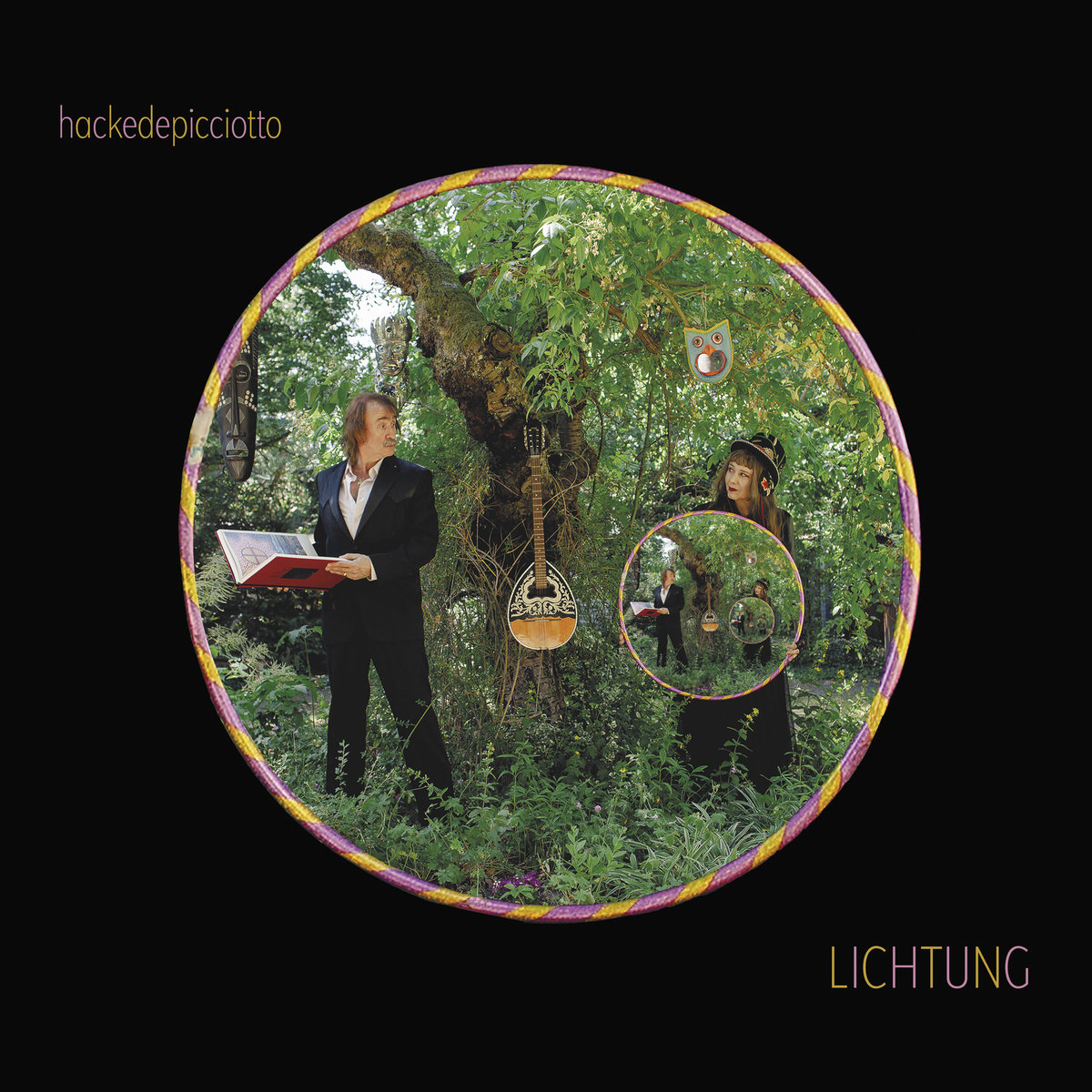
Sweeping and immersive and deftly intense in all the ways we alwayes earnestly yearn for but are seldom granted, Lichtung, the latest from the duo hackedepicciotto (Alexander and Danielle to their friends and confidantes, the former of course from Einstürzende Neubauten), their sixth not counting a best-of and a meditation soundtrack, is, by pretty much any metric, a stunner, wending as it does through one’s nervous system like a drug made of thunder and wonder and the often delicate murmurations of our restless soul. Where to start? How about the start.
The journey – and it is one, trust us – begins in what one may well assume is somewhere deep in the quietly mystifying electronic woods which of course makes nothing but sense given its title (and the album’s title) “Lichtung” means “clearing” but in any case what’s made exceedingly, um, clear is that it’s the perfect ton setter for the odyssey upon which we’ve just set foot. Awash in a gentle blanket of atmospherics and a lingering melody drifting up from the twilit depths, percussive in the ways of nature’s heartbeat, the piece leads us further and further in and there’s no turning back now would we want there to be.
Be it the next-up “Vogelfrei” (“Outlawed”), tramping rather fearlessly more deeply into the darkening textures, the arrangement, in its multitudes of mood dynamics both dancing around and crashing in to each other, Danielle’s vocal steady against the ever-ominous, ever-encroaching smoke and poetry (it is, to say the least, deeply compelling); the steadily accruing”Zeitenwende” that seems to follow an ever-opening pathway that appears as increasingly fraught as it does revelatory like some playful epiphany opening upon itself that could not be more evocative of its title that interprets as either “Turning of the Age” or “Turning of the Time”; the 5½ minute “Drauβen” that turns its otherwise innocuous title (“Outdoors’) into a compelling if fraught idyll of sorts that we guarantee will conjure images to match or the lengthy, almost unfathomably cinematic finale “Der Marschall” that, speaking of conjurations, builds with what we’ll call “an unsettling calm” which, seeing as citing cultural metaphors is damn near de rigueur when covering work of this magnitude and mystery we’ll allow ourselves to infer the spector of Sergio Leone scoring a lost-in-history F.W Murnau opus and leave the rest to your imagination which, from our vantage, were it us sitting in your place right now we would have, on that basis alone along with those already cited not to mention those we’ve implicitly left for your own wondrous discovery, already ordered this album from your own preferred source.
So, that’s us done writing so now there’s you’re procuring a copy of your own (here, for instance) and in so doing making your soul a very happy place indeed.