

Written by: Will Darpinian
I still remember listening to Linkin Park’s Hybrid Theory on a CD player at my middle school graduation, which hit me with the force of a musical revelation in my young life.
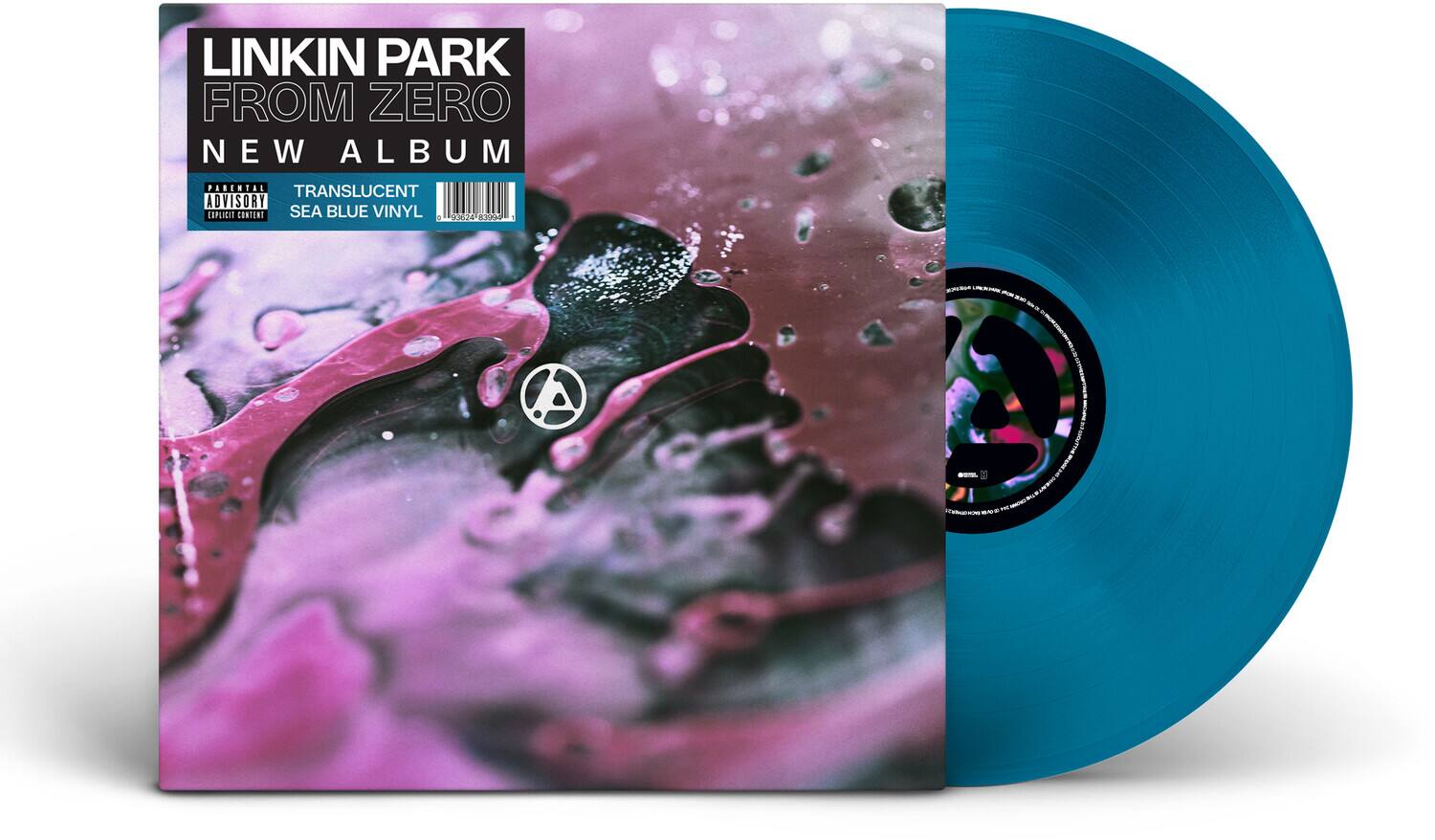
About twenty years later, I have been surprised by the release of their album From Zero. The seasons of my life have shifted and changed since the first time I headbanged along to heavy bass lines and finessed vocals. I charted in my changing life too, the passing seasons of the band like a distant constellation, from summer to autumn and then winter. There’s something profoundly comforting about Linkin Park’s new release still having the same defiant energy that I remember despite Time’s cruel passage. For me, Linkin Park’s impact on my life revolved around navigating who I was in a world full of ambiguity. Their songs gave voice to emotions I hadn’t articulated, problems I had not put together yet.
Now my age is catching up to me with the cynicism that comes from experience, but the brutal honesty of “Heavy Is The Crown” and “Up From The Bottom” is a refreshing draught of the youthful directness of confrontation with your problems in musical form. “Heavy Is The Crown” reminds me of another Linkin Park song, “Bleed It Out,” in its inversion of the introductory lyrical sting of rap followed by the chorus. Its themes of subverted responsibility and a direct engagement with betrayal go to the heart of personal and political issues by commenting on something deeper about power struggles and their effect on relationships. Not everything goes well when theory meets practice and the people who desire power the most actually get it and can enact their burning ideas. “Heavy Is The Crown” articulates that conflict while still managing to inject that rebellious energy that Linkin Park brings to its songs by placing the audience in the role of the one betrayed.
We can hear the rage of the vocals (“This is what you asked for!”) and we understand implicitly that at its core, “Heavy Is The Crown” is a song about things going very wrong and being powerless to stop them until they’ve run their course. And that certainly seems to be in the zeitgeist of the moment we’re living through now as I write this in 2026, as well as having profound personal applications in an increasingly cynical modern era where power politics have really ramped up in business and civics.
“Up From The Bottom’s” theme is at first familiar: everybody loves a zero to hero story, and there’s both glamour and some ugly romanticism about hardship and opportunity that goes along with that. But the song opts for both self-recrimination in the usual ways as well as acknowledgement that opportunity is structural and takes a force of effort to, well, get up from the bottom. The focus of the lyrics is on the struggle, and maybe the fact there is a universality to how we’re all struggling out here lies at the center of the song’s appeal. There is still the engagement with other forces in the song, the conflict that comes with being held back beyond your potential, that I think speaks to something timeless. There is only so much to go around and we often find ourselves in conversation with the restrictions of the world.
Arguably our entire society is founded on those restrictions, and “Up From The Bottom” has an ember of that era of rebellion and self-actualization that marks the early days of Linkin Park. Emily Armstrong’s addition as new vocalist manages to capture the combination of lyrical prowess and growling grunge that makes Linkin Park iconic, and I’m glad that this new season of the band has arrived. Winter shouldn’t last forever, and eventually the frost ought to melt and make room for new things to grow.
And even though the crown of responsibility is heavy, someone ought to wear it.